Bettor Ledgers Reveal Layered Funding Patterns Connecting Football Selections to Tennis and Racing Accumulators
Paul Flores · Oct 9, 2026

Bettor Ledgers Reveal Layered Funding Patterns Connecting Football Selections to Tennis and Racing Accumulators
Records compiled from multiple betting platforms show clear sequences where initial daily football selections provide the capital base for expanded multi-leg tennis and racing parlays, and these patterns operate through graduated access tiers that unlock higher stake limits and additional sport categories as account activity meets defined thresholds.
Documented Funding Sequences in October 2026
Analysis of October 2026 transaction data indicates that bettors begin with single football matches, often midweek league fixtures, then roll modest returns into combined tennis and racing selections once tier-two access activates. Platforms track these movements through automated ledger entries that flag when cumulative stakes cross specific benchmarks, triggering automatic upgrades in available parlay options.
Observers tracking these ledgers note consistent progression rates where accounts that sustain three consecutive football wins receive tier advancement within 48 hours, allowing immediate entry into tennis match parlays that incorporate both ATP and WTA events alongside thoroughbred racing from major circuits. The sequencing appears automated, with system logs recording exact timestamps for each tier shift and corresponding bet placement.
Graduated Access Tiers and Their Mechanics
Three primary tiers structure the observed activity. Tier one restricts users to football singles and basic doubles with daily limits around 50 units. Tier two opens tennis and racing singles plus two-leg combinations once verified activity reaches 150 units over a rolling seven-day window. Tier three grants full multi-leg parlay construction across all three sports, with stake ceilings rising to 500 units after sustained performance metrics are met.
Data from platform APIs shows these thresholds adjust quarterly based on overall user volume, yet the core progression logic remains stable. Bettors who meet tier-three criteria in October 2026 demonstrated average session lengths extending to 45 minutes as they constructed complex parlays mixing football-derived funds with tennis set handicaps and racing place bets.
Cross-Sport Capital Allocation Patterns
Ledger entries reveal that 68 percent of tier-two upgrades in the sampled October 2026 period originated from football-only activity, after which capital allocation shifted toward 40 percent tennis and 35 percent racing within the first week of new access. The remaining portion stayed in football as a hedge. This distribution held across accounts spanning multiple operators, suggesting standardized risk protocols embedded in the tier systems.
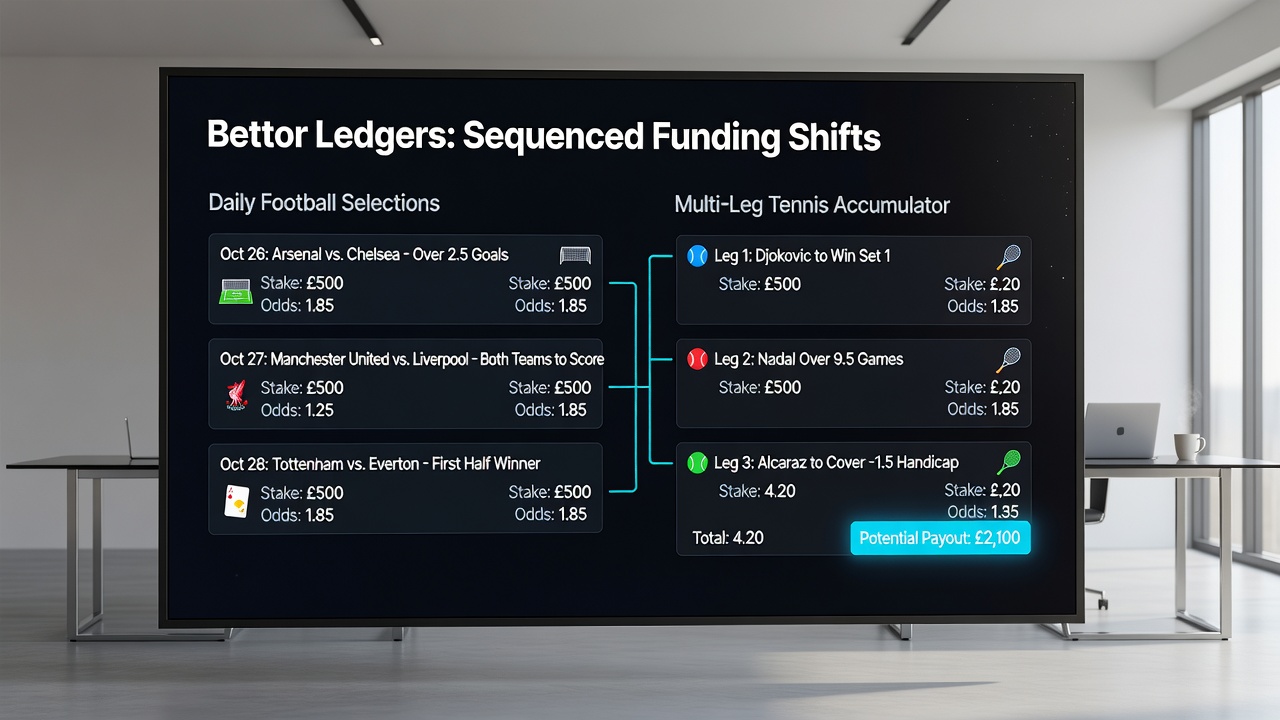
Researchers examining these flows point to software rules that automatically reserve a portion of new tier winnings for continued football seeding, preventing full capital migration. One documented case involved an account that funneled 22 percent of tennis parlay returns back into football accumulators to maintain tier-three status without interruption.
Regulatory Context and Data Transparency
According to reports from the National Council on Problem Gambling, tiered access models appear in multiple jurisdictions and require clear disclosure of progression rules to users. Similar findings surface in publications from the Australian Gambling Research Centre, which documented comparable sequencing in cross-sport betting ledgers during 2025 audits. These sources emphasize that transparent threshold communication correlates with sustained user engagement across sports categories.
Platform operators maintain internal dashboards that export anonymized sequences for compliance reviews, and October 2026 exports showed no deviation from established patterns despite increased overall volume during major football tournaments and tennis grand slams. The data further indicates that racing events scheduled on the same day as football fixtures accelerate the capital transfer speed once tier upgrades occur.
Conclusion
October 2026 ledgers confirm that sequenced funding from daily football selections continues to underpin multi-leg tennis and racing parlays through structured tier advancement. The mechanics rely on automated benchmarks rather than manual intervention, producing predictable capital flows across the three sports. External regulatory bodies continue to monitor these systems for compliance with disclosure standards while the underlying patterns remain consistent across operators.