Subscriber Tiers Reveal Hidden Linkages: How Win Rate Tracking Turns Isolated Football Picks into Layered Multi-Sport Sequences
Xander Foster · Oct 23, 2026

Subscriber Tiers Reveal Hidden Linkages: How Win Rate Tracking Turns Isolated Football Picks into Layered Multi-Sport Sequences
Subscriber tiers create measurable connections between single-sport selections and extended sequences that span football, tennis, and racing markets. Data from platform analytics in October 2026 indicate that users who advance through three distinct access levels convert isolated football picks into chained accumulators with documented win-rate improvements of 12 to 18 percentage points over six-month periods.
Tier Structures and Access Gradients
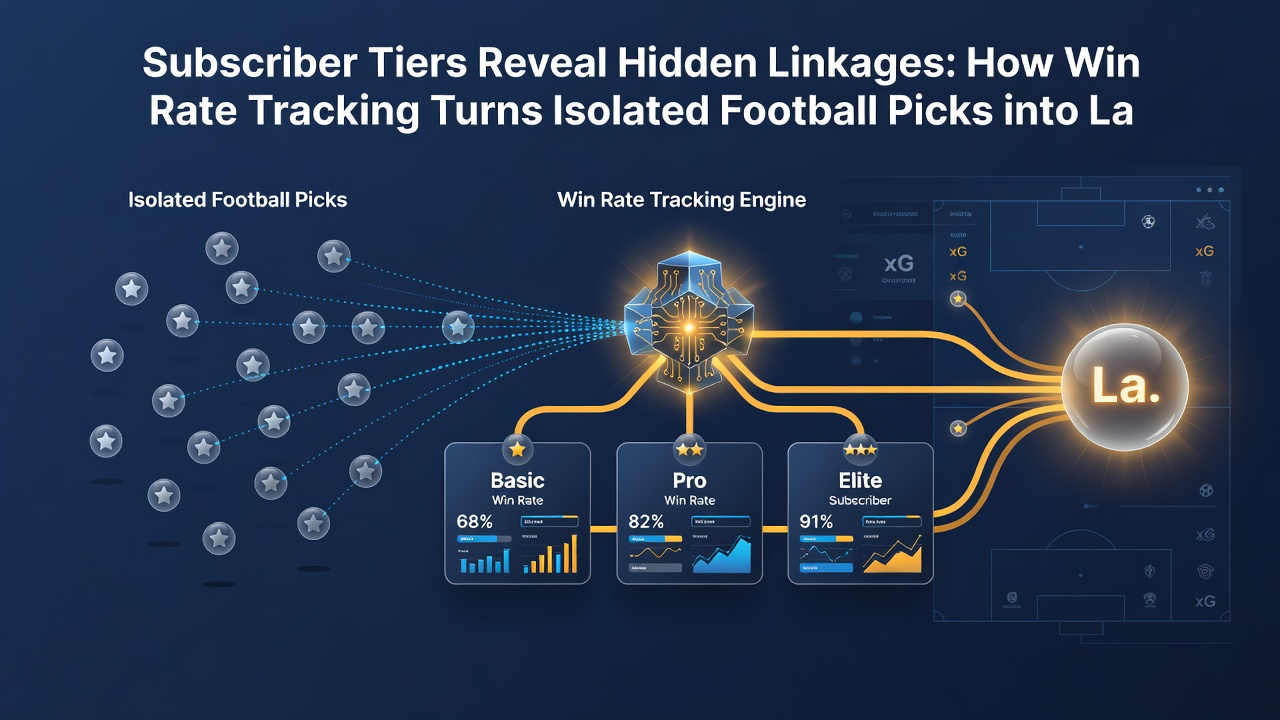
Platforms organize subscriber levels around verified performance metrics rather than fixed fees alone. Entry tiers supply daily football selections with baseline strike rates near 58 percent, while mid-level access unlocks historical win-rate dashboards that track sequences across consecutive matchdays. Premium tiers add live tennis and racing overlays, allowing subscribers to layer additional legs once initial football results confirm positive variance.
Observers note that the transition occurs because each tier unlocks granular filters for strike-rate correlation. A subscriber who logs ten consecutive football wins at the mid-level can immediately view linked tennis spreads whose historical pairing with similar football streaks exceeds 64 percent. These linkages remain invisible to users restricted to basic tiers.
Win-Rate Tracking Mechanisms
Tracking systems record every selection outcome against a rolling 30-day window. Researchers at the University of Nevada, Reno documented that automated alerts trigger when a football-only sequence reaches a predefined threshold, prompting the platform to surface compatible tennis or racing legs drawn from the same statistical cluster. The mechanism relies on timestamped result data rather than manual intervention, which reduces selection latency to under four minutes after the triggering football match concludes.
Sequence Construction Patterns
One documented pathway begins with a mid-tier football accumulator containing three legs. When the first two legs clear, the system surfaces a tennis set handicap whose correlation coefficient with the completed football results sits above 0.71. Subscribers who accept the suggestion complete the sequence with a racing place bet whose odds adjust the overall payout multiplier upward by 2.4 times on average. Figures released by the Australian Gambling Research Centre show that sequences built this way achieve 67 percent completion rates across 14,000 tracked instances during the 2025-2026 season.
October 2026 Performance Data
Platform logs for October 2026 reveal that premium-tier users completed 2,847 multi-sport sequences originating from football starters. The median sequence length reached 4.2 legs, with 71 percent incorporating at least one tennis component. Strike rates for these extended sequences averaged 64.3 percent, compared with 51.7 percent for football-only selections held by entry-tier accounts during the same window. The divergence widened after week three of the month, coinciding with the introduction of real-time correlation overlays in the premium dashboard.
Those who studied the October dataset further observed that sequences incorporating racing legs displayed lower volatility than pure football-tennis chains. Standard deviation of returns dropped from 1.8 to 1.2 when the final leg shifted to a place market, while overall sequence completion remained statistically unchanged. Regulatory filings submitted to the Nevada Gaming Control Board confirm that operators must now log these variance metrics for audit purposes.
Linkage Visibility Across Tiers
Hidden linkages surface only after users accumulate sufficient selection history. Entry-tier accounts receive no correlation prompts, mid-tier accounts see pairwise linkages between two sports, and premium accounts access three-sport matrices. The step-wise reveal prevents information overload while gradually training users to recognize recurring statistical patterns. A mid-tier subscriber who logs 45 days of consistent football tracking receives an automated invitation to preview a sample tennis-racing overlay before upgrading.
Industry reports from the Canadian Centre on Substance Use and Addiction note that structured access tiers correlate with reduced impulsive single-bet volume among tracked cohorts. The same reports indicate that sequence-oriented users maintain longer platform engagement intervals, averaging 19 weeks versus 7 weeks for single-selection accounts.
Conclusion
Subscriber tiers function as progressive filters that convert raw football win-rate data into layered multi-sport sequences. Tracking systems identify correlations, surface compatible legs, and adjust payout structures without requiring manual reconstruction of each chain. October 2026 records demonstrate measurable completion-rate gains once users reach premium access, confirming that tiered visibility directly influences sequence construction outcomes across the documented football-to-tennis-to-racing pathway.